
Recognizing that my calling had been given by God, James, Peter, and John—the pillars of the church—shook hands with me and Barnabas, assigning us to a ministry to the non-Jews, while they continued to be responsible for reaching out to the Jews. The only additional thing they asked was that we remember the poor, and I was already eager to do that.
– Galatians 2:9-10 The Message
These verses in Galatians record one of the earliest versions of what has evolved into the “appointment process” in The United Methodist Church. About two thousand years ago leaders in the Jesus movement came together, examined the ministry of an emerging leader—Paul, and determined that he was, in fact, called to preach the Good News of Jesus Christ. And then in consultation with Paul, the leaders assigned/appointed Paul and Barnabas to preach to the non-Jews and the others went to minister among the Jews. In addition, Paul was told to prioritize meeting the needs of the poor as he shared the message of the gospel.
We read other New Testament letters that everywhere Paul went to preach the Good News, Paul engaged in and encouraged others to engage in ministries that addressed the needs of the poor and transformed communities. He established small communities of mutual support and accountability. And he mentored and empowered local leadership. (To read more about how we might recover these biblical practices and reignite the fire of the Methodist movement see Calling on Fire: Reclaiming the Method of Methodism by Ashley Boggan and Chris Heckert).
The work of discerning the ministry and giftedness of leaders encompasses more the just the appointive cabinet. Across both annual conferences District Committees on Ministry (DCOM) have been doing the work of examining the ministry of local pastors, those who are discerning a call to ordained ministry, and Certified Lay Ministers serving as pastors.
The Conference Relations Committees (CRC) of both conferences have been doing the work of examining credentials of those clergy persons from other denominations or annual conferences who want to serve in our annual conferences. The Boards of Ordained Ministry (BoM) will, in the coming weeks, conclude their provisional and full member examinations of those who have discerned a call to ordained ministry. These bodies let me know who is eligible for consideration for an appointment and those who must be appointed.
Just as the work of discerning the ministry and giftedness extends beyond the appointive cabinet, it also extends beyond the appointment season. District Superintendents meet with clergy in one-on-ones over the summer to help them engage in self-reflection about their ministry so that they may provide updated information on their Pastor Profile/Advisory for Appointment Making.
Then, during charge conference season, Staff Parish Relations Committees engage in a process of examining the ministry of the clergy person(s) assigned to them. They share this information with their District Superintendent through the Church Profile/Advisory for Appointment Making. Both the conversations and the forms are an essential part of the appointment process.
Each year, the EPA and GNJ cabinets discern appointment priorities for the year, just as those early church leaders decided what their priorities would be in their assignment process. This appointment season we will seek even more earnestly to be empowered and guided by the Holy Spirit.
As we make appointments, we have covenanted to use a lens of imagination, possibility, and hope rather than a lens of fear and scarcity which simply looks to plug appointment holes. Looking through the lens of imagination, possibility and hope your bishop and cabinets, in no particular order, covenant to:
- Support pastors who speak prophetically and advocate for social justice
- Support pastors by encouraging their perseverance through difficult seasons of ministry
- Prioritize churches with potential for vitality and missional impact irrespective of full or part-time status
- Facilitate appointments that enhance the vitality of cooperative parishes
- Prioritize the strategic distribution of elders across each annual conference
- Prioritize the needs of pastors and their families
- Utilize a covenantal versus a corporate lens and prioritize missional impact over salaries
- Make appointments that enhance a church’s likelihood to move closer to having membership that reflects the demographics of its surrounding communities
- Facilitate appointments and cooperative configurations so that buildings are resources for ministry rather than obstacles to ministry
- Identify characteristics of leaders who can revitalize and develop communities
- Recruit and support leaders from non-traditional places with non-traditional gifts.
We covet your prayers as we engage in this ancient process of assigning leaders to mission fields to do the work of bringing good news to the poor, proclaiming release to the captives and recovery of sight to the blind, setting free those who are oppressed, and proclaiming the year of the Lord’s favor.
Please pray for our wisdom and courage. Pray for clergy families who will experience a transition during this season. Pray for the churches and surrounding communities who will say goodbye to previous leadership and receive new clergy leadership.
Know that we are praying that all of the new and the unchanged appointments will have maximum impact and advance God’s glory in local communities, across the United States, and around the world.
Peace and Blessings,
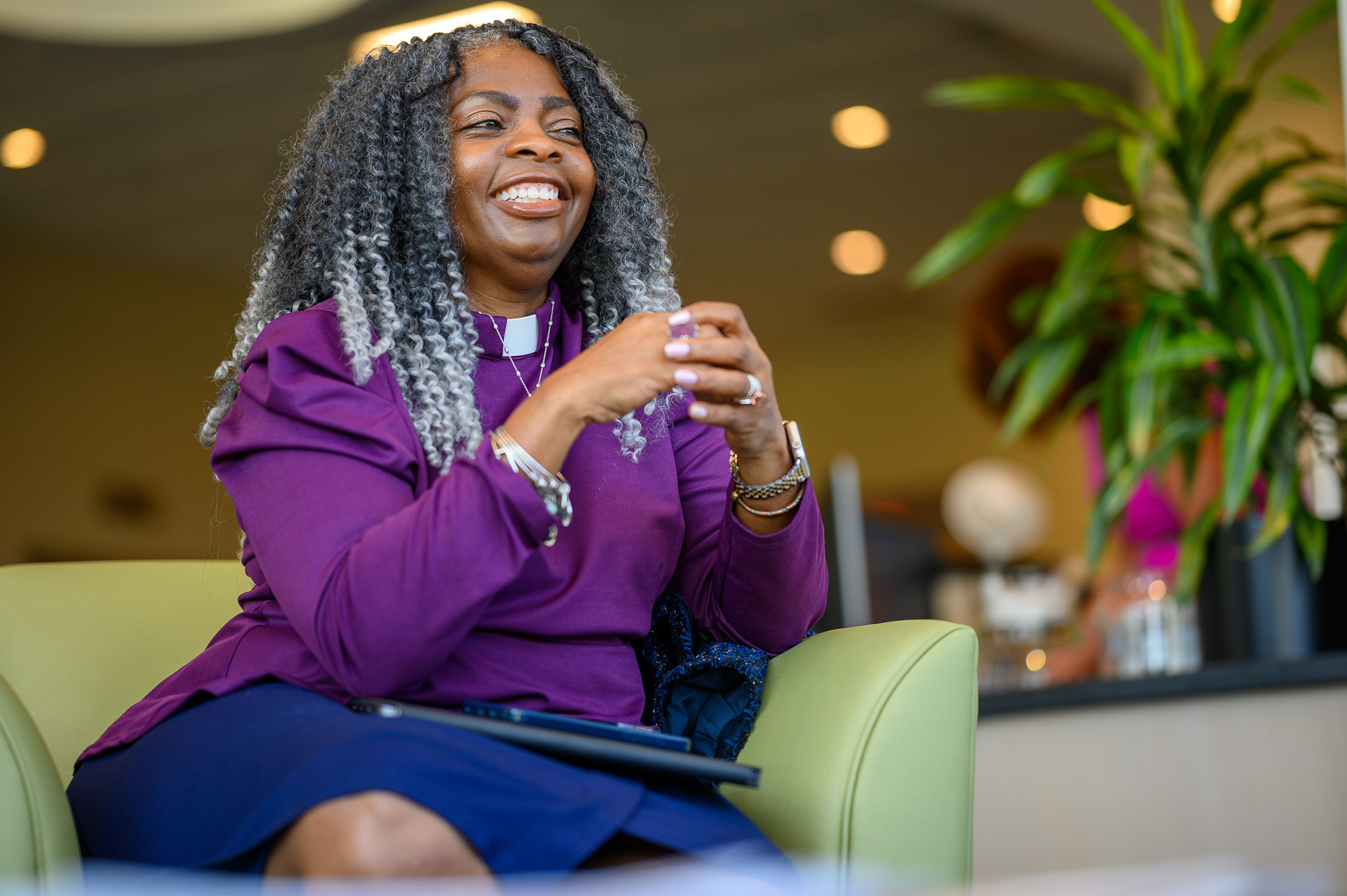
Bishop Cynthia Moore-Koikoi
The United Methodists of
Eastern Pennsylvania & Greater New JErsey
BishopMoore-Koikoi@epagnj.org
EPA: 484-474-0939 | GNJ: 732-359-1010