
This year marked the tenth anniversary of the Eastern Pennsylvania Annual Conference’s 2016 Act of Repentance, a response to the 2012 General Conference “Act of Repentance toward Healing Relationships with Indigenous Peoples.” That small word, “toward,” acknowledges that the work of repentance, justice, and healing are ongoing commitments rather than one-time events.
To mark the milestone, the Eastern Pennsylvania Committee on Native American Ministries (CoNAM) hosted a breakfast during Annual Conference on May 20 at the Wildwoods Convention Center in Wildwood, New Jersey. Before morning Bible study began, attendees gathered to learn about the committee’s work over the past decade and to remember the ongoing call to repent, seek justice, and bring healing.
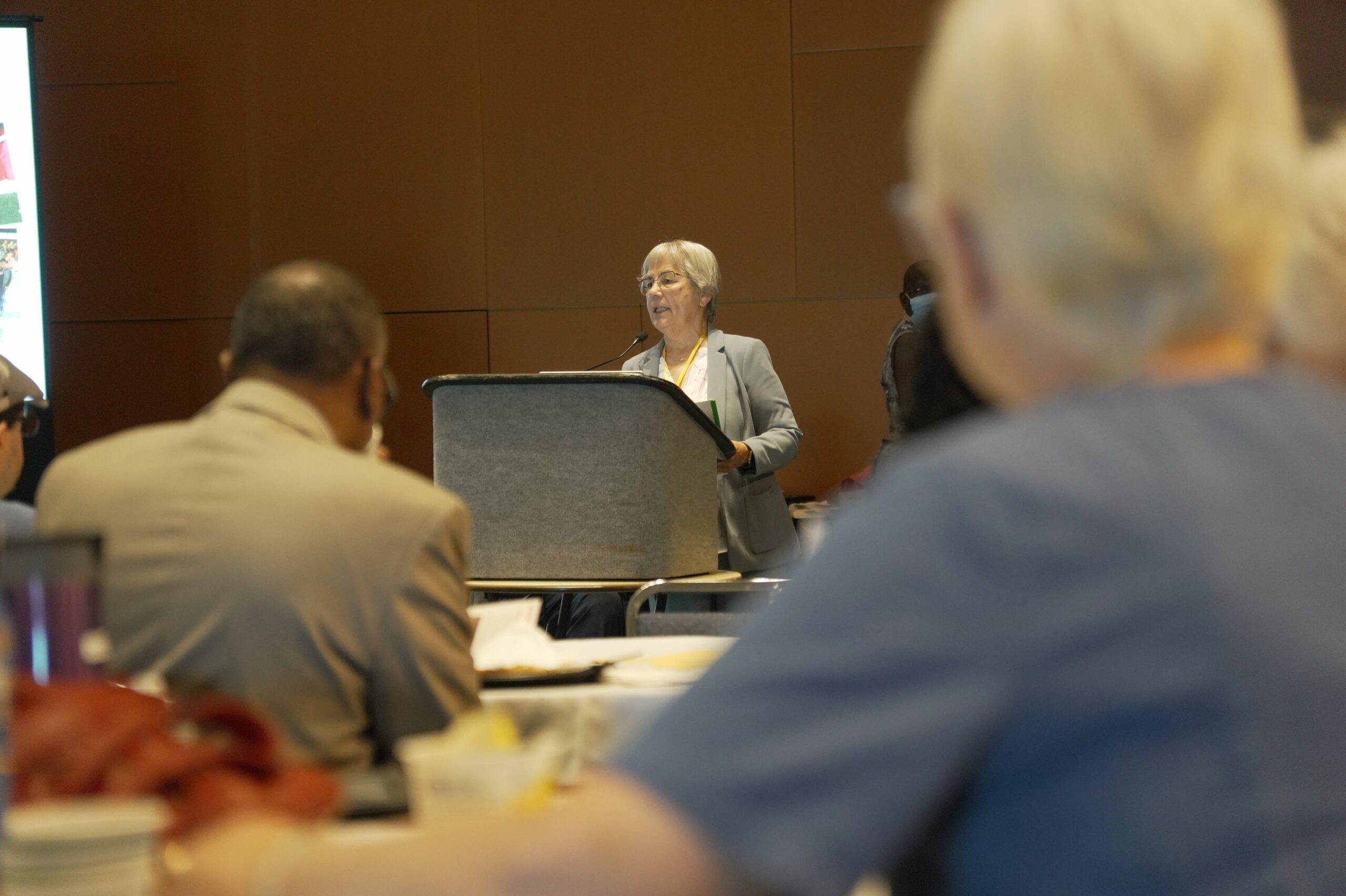
The gathering itself reflected that purpose. CoNAM Secretary Verna Colliver welcomed those present and introduced committee members, including the Rev. Barbara Lee who then brought a greeting from committee leader Sandi Chipps Cianciulli (Oglala Lakota Heritage), who was unable to attend.
“It is proper that we acknowledge we are on land that has been stewarded by indigenous people since time immemorial,” read Cianciulli’s greeting, “and that we acknowledge the pain and trauma caused by colonialism. We are honoring the resilience of Native American communities and committing ourselves to learning the truth about our shared history when we acknowledge them.”
Cianciulli’s message reminded those gathered that the anniversary was not simply about remembering the past but about confronting injustices that continue to affect Native communities today. She called United Methodists to “seek holy courage and demand justice within our church structures and government, turning our prayers into actions.”
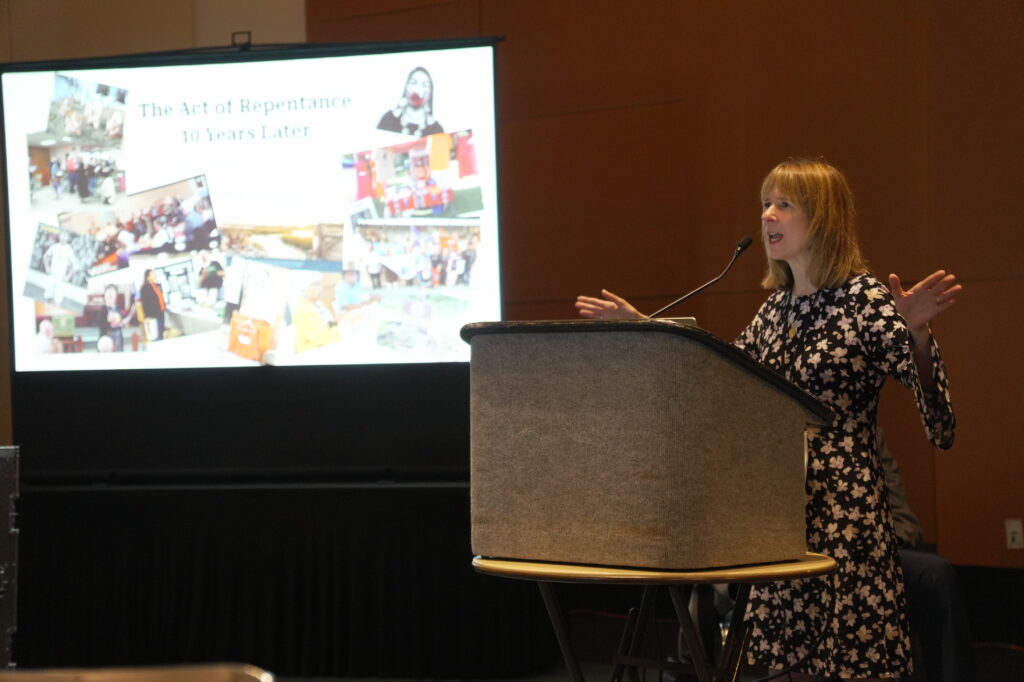
The Rev. Dawn Taylor-Storm, Executive Director of Connectional Ministries, echoed that call in prayer, asking God, “Let us not rest. Let us not grow weary until all have access to abundant life in all its forms…Call us to repentance. Call us to renewal. Call us to reconciliation that shows up and that acts to create a different future for your children.”
Looking back to move forward
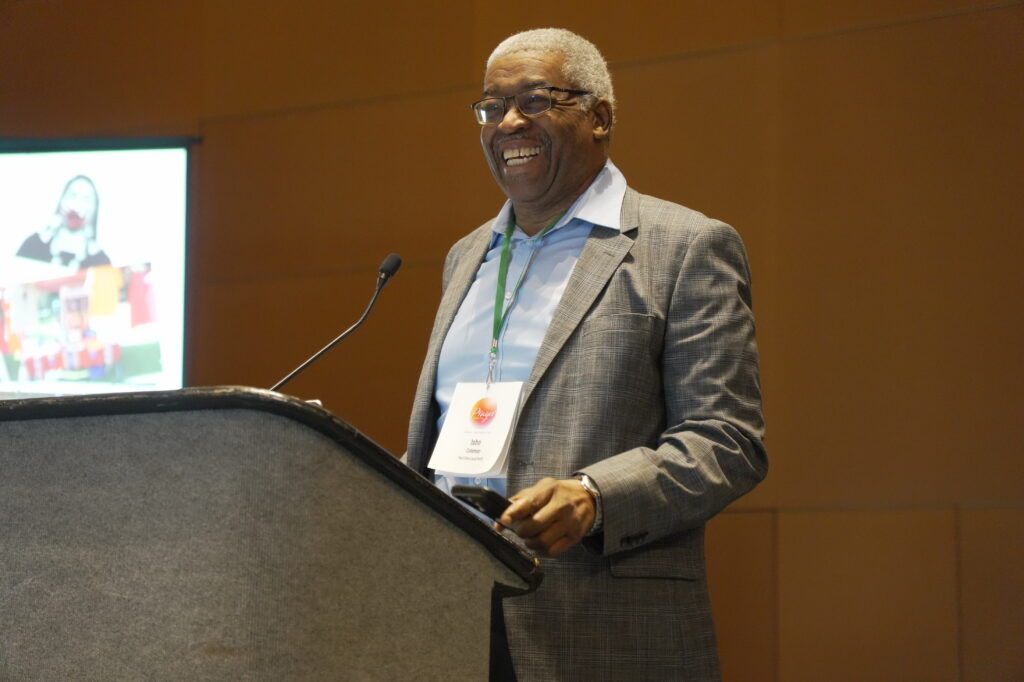
The Rev. John W. Coleman, a CoNAM member and licensed local pastor from Eastern Pennsylvania, currently on loan to Greater New Jersey, highlighted many of the committee’s initiatives since the 2016 Act of Repentance. Much of his slideshow presentation, prepared by Cianciulli, focused on the history and ongoing legacy of the former Carlisle Indian Industrial School in Central Pennsylvania.
The institution operated from 1879 to 1918 as the first of many federal, off-reservation schools established to forcibly assimilate Indigenous children into Anglo-American culture, many of them aided by various churches and denominations. To achieve this, the school forced children to adopt typical Christian names and cultural norms, while strictly punishing the use of their native languages.
The school’s founder and first superintendent Captain Richard Henry Pratt summarized his brutal philosophy with this infamous declaration: “Kill the Indian in him; and save the man.”
Built as an army base in the mid-1700s, the Carlisle Barracks today serves as the home of the U.S. Army War College.
The presentation included a music video, “He Can Fancy Dance,” by Métis/Cree singer-songwriter Cindy Paul, that gave poignant voice to the experiences behind the Carlisle School’s painful history. It paired images of Indigenous children and adults in their traditional dress with photographs of them in European clothing, illustrating the forced cultural assimilation experienced by many at boarding schools like Carlisle.
The music and imagery deeply moved those in attendance. Paul’s lyrics lamented, “It was the day the black robe came into his land. They said we will teach your children right from wrong. And they took him from his mother’s hand, he was gone. He could not fancy dance. He could not sing. He was told it was a sin.”
The former Methodist Episcopal Church supported many of these boarding schools until the 1930s. Coleman cited the 2024 report on The United Methodist Church and Indigenous Boarding Schools from the General Commission on Archives and History, noting that its findings deepen the church’s responsibility to continue the work of repentance.
That commitment has taken tangible form. This year, Eastern Pennsylvania’s CoNAM partnered with the Circle Legacy Center in Lancaster to replace the outdated and pejorative Pennsylvania state marker at Carlisle Indian Industrial School’s historic campus with a new one that more honestly reflects the school’s history.
The new marker acknowledges that more than 10 000 Indigenous children attended the school between 1879 and 1918 and claims a “mixed and lasting legacy” for the school, which “create[ed] opportunity for some students and conflicted identities for others.” It also marks the cemetery where nearly 140 students who died at the school are still buried, while the remains of about 60 have been repatriated since 2017.
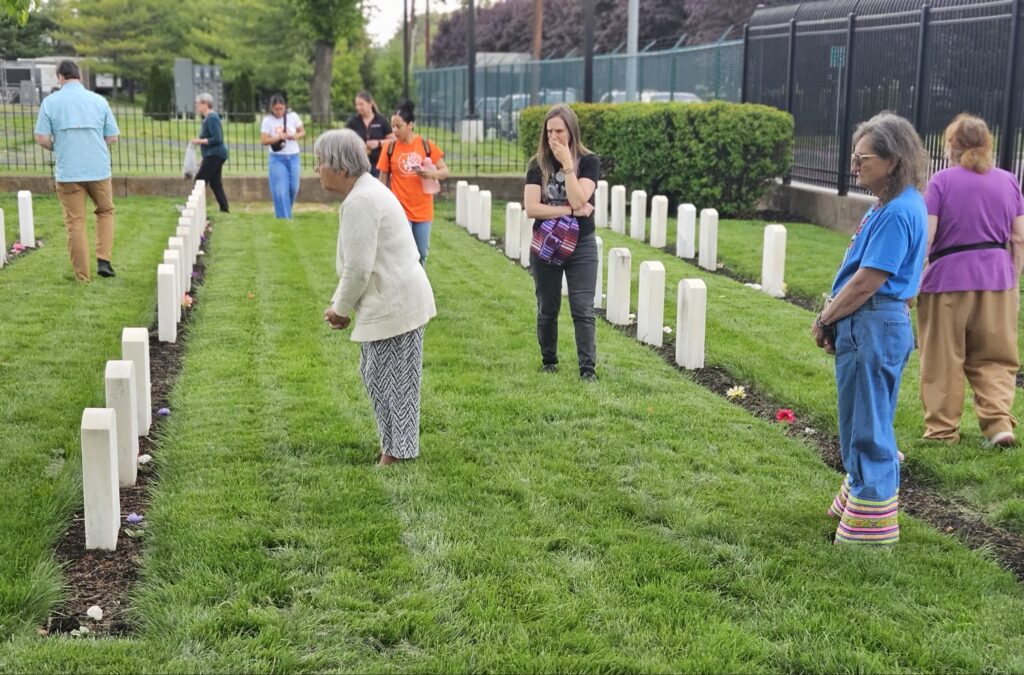
Coleman described annual efforts to honor those children. During a recent visit by the Northeastern Jurisdiction Native American Ministries Committee (NEJNAMC), members prayerfully placed small, handsewn, cloth spirit ponies at the children’s gravesites.
Eastern Pennsylvania CoNAM also joins the Circle Legacy Center, the American Indian Society, and the Susquehanna Conference CoNAM each Memorial Day weekend to decorate the graves. The tradition that began in 1906, when surviving students and alumni placed flowers on the graves of their classmates, and it was revived in 1973.
Taylor-Storm reflected on the NEJNAMC visit to Carlisle too, recalling stories of children who quietly spoke their Native languages together at night despite efforts to erase their identities.
“The empire will try to quiet the children,” she said. “But our God works through our children. Our God brings love.”
She also connected that history to injustices still taking place today, recalling a NEJNAMC member who remarked, “There are children now who are being pulled from their families and their communities and sent away.”
For Taylor-Storm, the work of repentance is not confined to the past. It is a continuing call to recognize injustice wherever it appears and to stand alongside those seeking healing today. She gave thanks for the leadership of Native siblings in this work of justice.
Living repentance today
Coleman also highlighted the committee’s ongoing work to ensure Native voices are heard in both the church and the wider community. Among those efforts is Eastern Pennsylvania CoNAM’s involvement in the annual Jim Thorpe Sports Days at Carlisle Barracks/
The friendly athletic competition between the various military war colleges honors the legacy of Thorpe—Olympian, professional football player, co-founder and first president of the NFL’s predecessor league, and co-founder of the Indian Actors Association. Thorpe was a student-athlete at the Carlisle School and played on their championship football team.
Since 2013, Eastern Pennsylvania CoNAM and the Circle Legacy Center have partnered with the Carlisle barracks to bring special Native American guests to open the Jim Thorpe Sports Days event. When barracks leaders ended that collaboration in 2025, the Eastern Pennsylvania and Susquehanna conference CoNAMs turned to Carlisle United Methodist Church to host the gatherings with Native guest speakers before the tournament.
Education is central to CoNAM’s ministry. Through its interactive “Loss of Turtle Island” presentation, participants experience a visual, narrative representation of the centuries-long loss of Indigenous land. Standing together on a patchwork of blankets symbolizing North America—that is, Turtle Island—participants are asked to surrender their places as the story of Indigenous peoples’ land loss and displacement unfolds, creating a powerful illustration. Developed by KAIROS, the experience has become one of the committee’s most effective teaching and dialogue tools. CoNAM has presented it nearly a dozen times at churches, local colleges and Innabah Camp and Retreat Center. Requests for more presentations are being scheduled.
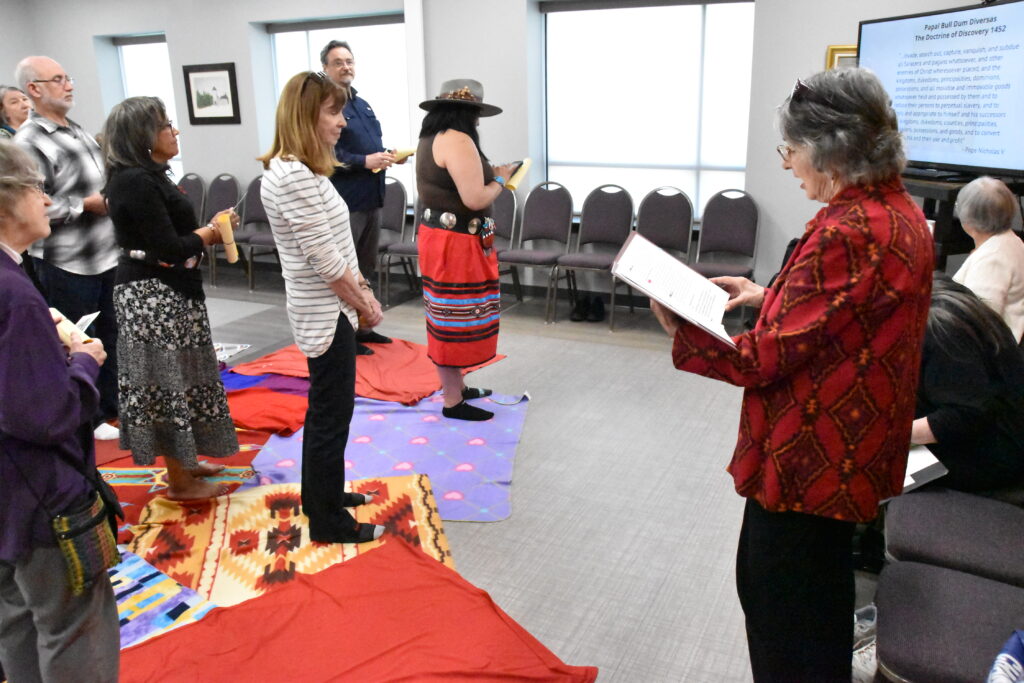
The committee also helps congregations to develop land acknowledgments, which go beyond the recitation of a statement. They are born from a close study of the original inhabitants of the land on which the church meets and efforts to connect with descendants in the region. Marshallton UMC, whose pastor, the Rev. David Eckert attended the breakfast, recently did a land acknowledgment study and ceremony, assisted by the Eastern Pennsylvania CoNAM and Cynthia Mosley (Lenni-Lenape-Nanticoke) of St. John United Methodist Church in Bridgeton, NJ.
CoNAM’s commitment to education, listening, and ongoing relationships extends into advocacy, too. The committee supports grassroots organizations responding to the Missing & Murdered Indigenous Peoples crisis, works against Native American voter suppression efforts and advocates for the creation of a federal Truth and Healing Commission. Attendees were invited to join those efforts as part of the conference’s continuing work of repentance.
The committee also invests in future generations. This year, scholarships funded by the conference’s annual Native American Ministries Sunday offering were awarded to Native students Nathan Solorio, Elijah Hadley, and Adelina Wilks, who are pursuing studies in fields including nursing and pharmaceutical science. The scholarships recognize not only academic achievement but the recipients’ emerging leadership within their Indigenous communities.
Finally, Coleman encouraged attendees to continue learning by attending Native American powwows, including the annual gathering at Penn Treaty Park in Philadelphia each Indigenous Peoples’ Day (October 12, 2026). CoNAM regularly participates in these events, offering information about its ministry while continuing to build relationships.
While many and varied, the efforts of CoNAM are all expressions of the same commitment: telling the truth about the past, building authentic relationships in the present, and working toward a more just future.
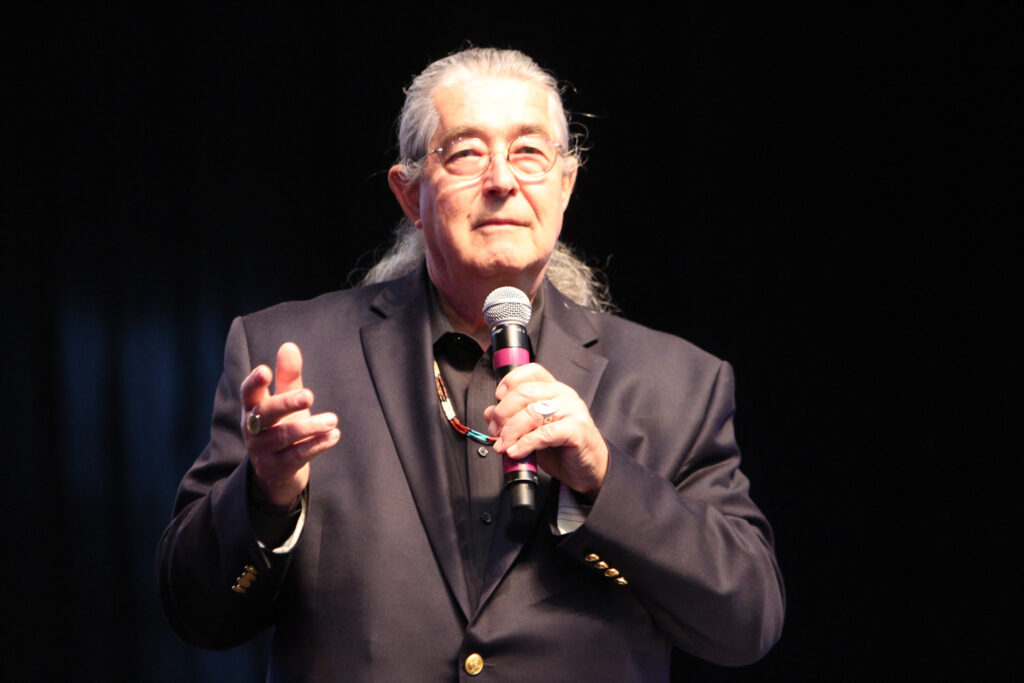
The historic Eastern Pennsylvania Annual Conference Act of Repentance in 2016, led by Bishop Peggy Johnson, featured a procession and land acknowledgement ceremony, special presentations, and a sermon and teaching by the Rev. Thom White Wolf Fassett (Seneca), retired head of the United Methodist Board of Church and Society and renowned advocate for human and indigenous rights.
Ten years later the CONAM’s work continues, signaling that repentance remains an ongoing practice. Through education, advocacy, relationship-building, and remembrance, CoNAM’s members continue to point the church toward healing while echoing a refrain often repeated by Cianciulli: “We’re still here. We’re still vital. And we’re still important.”