
In recent years, awareness and acceptance of neurodiversity—the reality that people’s brains develop and function in different ways—has grown significantly. Often associated with conditions like autism and ADHD, neurodivergence reflects a wide spectrum of human experience. Yet the church has not always embraced these differences as part of the diversity of Christ’s body, at times lacking understanding or even causing harm.
Increasingly, congregations are recognizing a call to more faithful ministry with and by neurodivergent people, creating communities that are not only more inclusive, but more whole. St. Luke UMC in Bryn Mawr, Pennsylvania and Haddonfield UMC in New Jersey are two of those congregations.
St. Luke UMC, Bryn Mawr, PA
St. Luke’s journey began a couple of years ago when the church was hiring for a new associate pastor focused on outreach to college students.
As the search neared its end, the Staff Parish Relations Committee (SPRC) settled on two final candidates, Rev. Qadry Harris and Rev. Brittany Whyte. Harris was a great fit for the college outreach ministry, himself a Ph.D. candidate at Temple University. Whyte was equally impressive, but she sparked something different and unexpected in the SPRC.
In addition to her ministry training and experience, Whyte spoke from her experience as a neurodivergent person with autism and ADHD. As she did, the committee called to mind several families in the congregation with neurodivergent members. From there, a new possibility emerged: “Leadership felt we have a need here to do ministry for neurodivergent people that we didn’t see before,” shared Rev. Mark Salvacion, St. Luke’s lead pastor. “It was a God-moment.” The church committed to the idea and found the resources to hire both Qadry and Whyte.
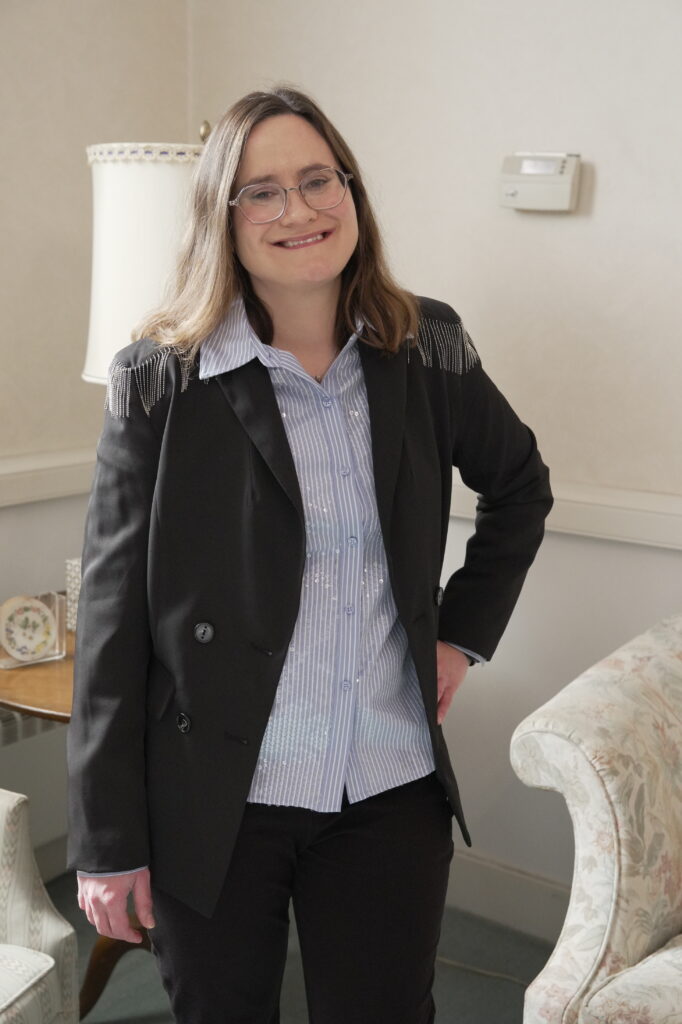
Whyte started—and continues—her ministry by deeply listening and connecting with the congregation’s neurodivergent members. As she listens, she is learning about the importance of flexibility in ministry with neurodivergent individuals. “A lot of time people go into a mission situation with a very concrete idea of what the needs are,” she shared, “and then they find out, well, every individual is going to have different needs and we need to be flexible and anticipate that.”
With Whyte’s leadership, the church is becoming more flexible and making subtle shifts in its culture that, over time, foster a more welcoming and inclusive environment. For instance, the congregation is learning to “be mindful in those moments before and after the service, particularly with people with sensory issues, that we don’t overwhelm them, that we ask if it’s okay to hug people and things of that nature,” says Whyte.
St. Luke is not only passionate about ministry to neurodiverse people but also by and with neurodiverse people in all areas of the church’s life. Whyte’s own leadership, for instance, is not confined to the neurodiversity ministry, but also encompasses preaching, worship and small group leadership.
Last year, the majority of the church’s delegation to Annual Conference was neurodivergent.
As we spoke, the sound of a piano could be heard in the sanctuary nearby. The piano tuner comes to the church regularly, shared Whyte. “Our Music Director is also neurodivergent. … We like to have everything tuned for him because he will notice if it’s not tuned!”
Beyond creating a more welcoming environment and empowering neurodiverse leaders in the congregation, the centerpiece of Whyte’s ministry is a long-term project to create a sensory-friendly space in the church’s building. Many neurodivergent people have sensory issues and need either certain types of sensory input or reduced sensory input to regulate.
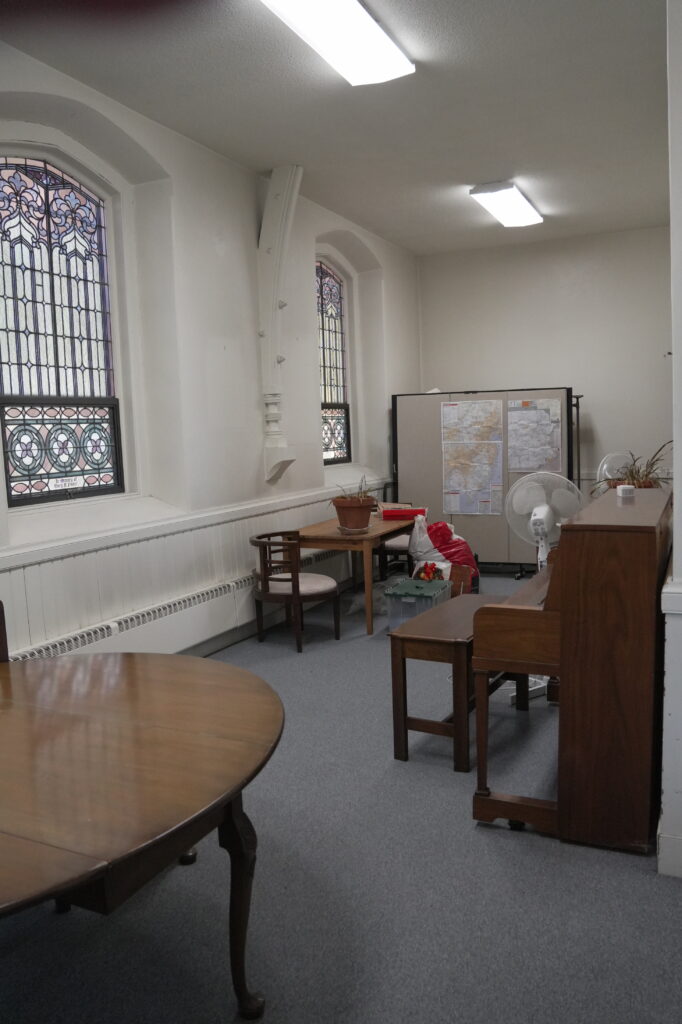
Whyte worked with the church’s trustees and other leadership to determine what space would work best to convert into a sensory-friendly room – taking historical, financial, and practical factors into consideration. They have settled on the old choir room that once stored sheet music and choir robes.
The room will be stripped down to the studs and rebuilt expressly as a sensory-friendly room. It will feature Snoezelen products that “help reduce agitation and anxiety, but they can also engage and delight,” (Snoezelen) through special lighting, sound, and textures.
This space will not only provide neurodiverse churchgoers with a place to regulate or take a break from the main worship space but will also help to build connections with the wider community.
The Holy Spirit is already at work building these connections. Recently, the church was seeking a new tenant to utilize their space during the week. At the same time, Jennifer Kempin of the Fáilte Academy, a microschool for neurodivergent children, reached out to the church in search of a space to use. Of all the churches she’d researched in the area, St. Luke was the only one to explicitly name welcome of people with diverse physical and mental abilities on its website.
The Fáilte Academy began using a classroom in the church’s Education Building in late March and will also use the sensory-friendly room when it is ready. But the partnership between the church and the school goes beyond building use.
When Kempin first inquired about the church’s space, she was delighted to meet Whyte and asked if she would be willing to spend a few hours a week talking with the school’s students. The idea was that spending time with an autistic adult who is thriving in pursuit of her purpose would be a powerful experience for the students.
Whyte is hopeful that the church’s relationship with the Fáilte Academy is just the first of many partnerships with community organizations that also serve neurodiverse people.
As Whyte looks toward her own future and that of the church, she is excited to see the ways that understanding, interest, and support for neurodiverse communities are blossoming. Whyte points to growing resources like the work of the Autistic Self Advocacy Network and a recent explosion of books exploring autism and theology, including Autism and Worship: A Liturgical Theology by Armand Léon van Ommen.
For churches hoping to become more welcoming and inclusive, Whyte encourages a simple but profound starting point: listen to neurodiverse voices already present in your congregation and community, remain flexible, and create spaces where people can connect through shared interests and experiences. In doing so, churches may discover not only new ways of welcoming others, but new ways of helping people feel seen, valued, and less alone.
Haddonfield UMC, Haddonfield, NJ
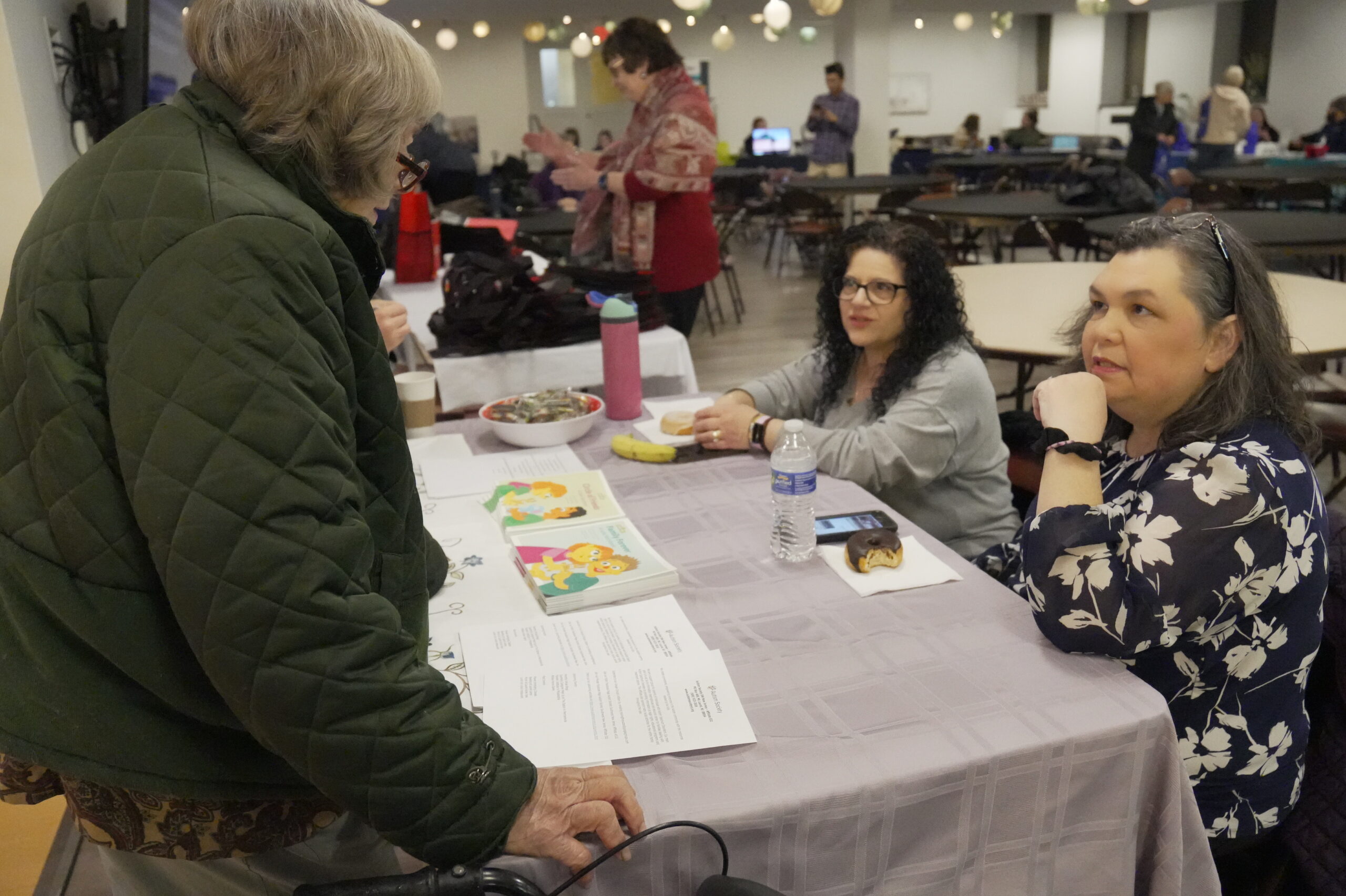
Across the river, Haddonfield UMC has undergone a similar journey. Through their work with Pathway Bridges, which helps congregations reflect on the needs of their community, Haddonfield realized that there were many families with neurodivergent children in their orbit. They decided to host a neurodiversity conference.
On Saturday, January 31, Haddonfield UMC (HUMC) hosted their second annual Neurodiversity Conference – a time for neurodiverse individuals and their loved ones to gather, connect with community resources, and listen to a powerful keynote message.
The morning began with a resource fair set in the church’s Propert Café. During the fair, conference attendees had an opportunity to connect with a myriad of organizations serving neurodivergent people, from Spectrum NJ, an organization run by autistic people that fosters independent living, socialization, and support groups, to Blue Light, a music program where instructors and audio engineers help people of all abilities bring their musical dreams to life.
Dr. Phil Fizur, a member of HUMC and psychologist who spearheads the conference, said bringing these organizations together in one space is a much-needed step toward breaking down the silos within South Jersey’s health and social service systems—allowing them to connect not only with those they serve, but also with each other. He reflected, “As individuals we can do a lot of good work; as a unified community, we can do great things.”
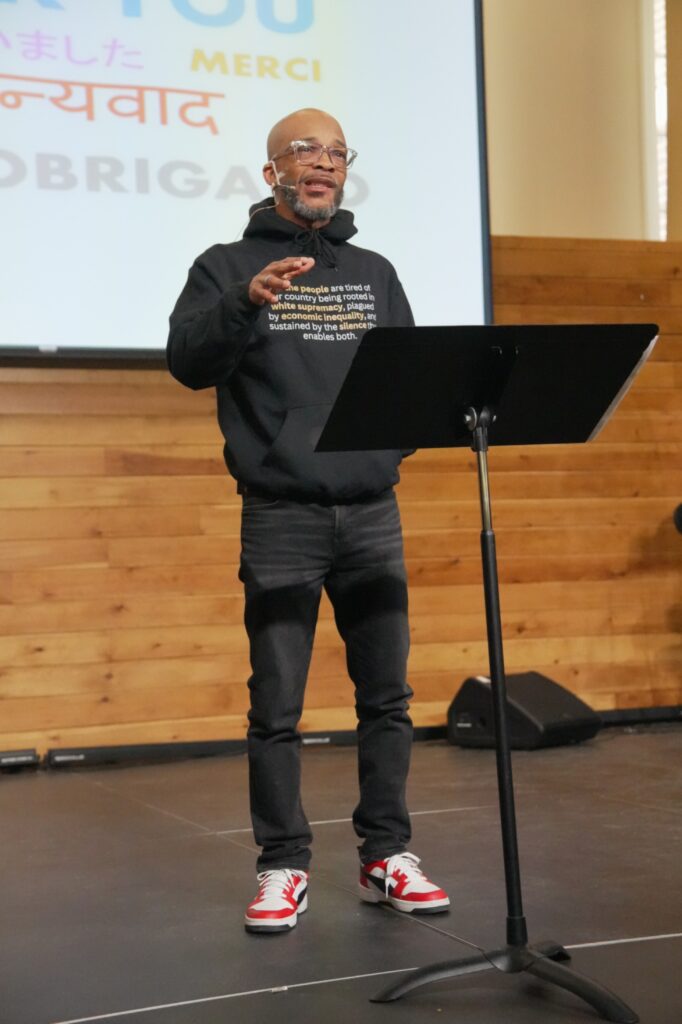
Midmorning, attendees were invited to gather in the Fellowship Hall where Dr. Michael Hannon gave the keynote address. Hannon is a counselor and professor with expertise in providing care to Black boys, men and fathers of autistic people. His talk centered around his own journey as a Black dad to his autistic son, Avery, now 21 years old.
Hannon candidly shared how he and his wife learned, often painfully over the years, to listen and respond to Avery’s needs. Nevertheless, his message was one of hope. He encouraged those present to discover hope by listening to and learning from the neurodivergent people in their lives so they can be “the right kind of help.” He pointed people to hope through community, faith, and ultimately, through autistic joy. For Hannon and his family, that joy – Black autistic joy – has come through Avery’s love of music and dancing.
“When you have hope, a sliver of it, it provides inspiration,” said Hannon, “and I’m here to remind you that the neurodivergent people in your lives and the neurodivergent people here today are a source of hope, if we’ll allow it.”
In a question-and-answer period that followed, neurodivergent individuals and their families posed frank and honest questions to Hannon who responded with grace, hope, and practical advice.
The conference closed with a shared meal during which participants had an opportunity to debrief, connect once more over discussion questions, and simply enjoy one another’s company.
HUMC’s second Neurodiversity Conference was a clear success. Neurodiverse people and their loved ones connected, found support, and were celebrated. However, the conference is only one part of HUMC’s much broader approach to ministry with neurodiverse people.
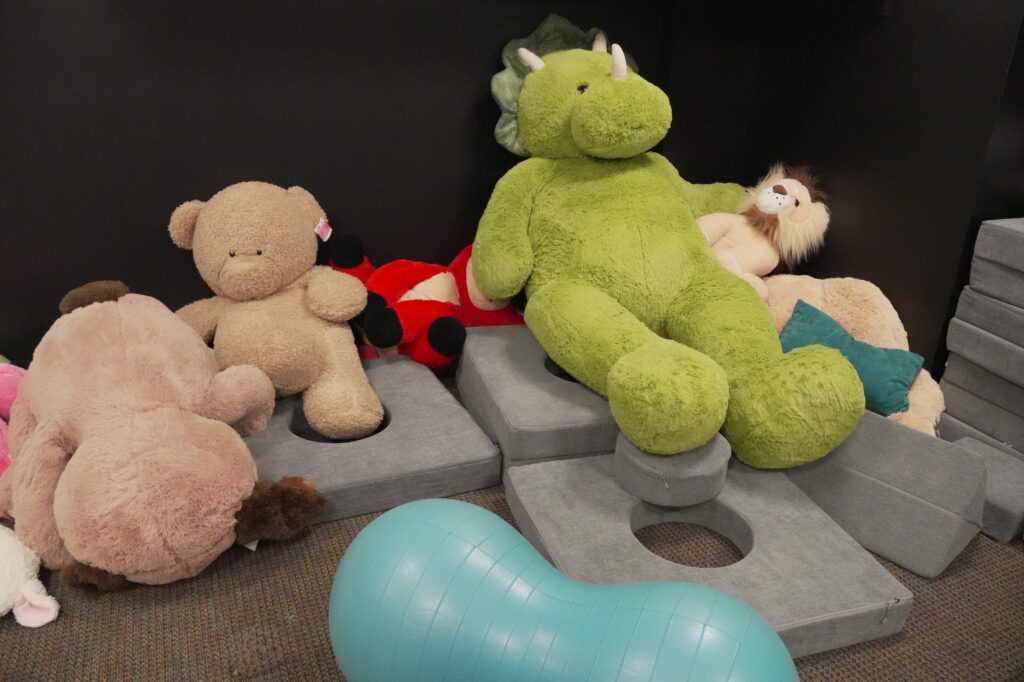
The church’s second floor features a sensory-friendly room, a quiet space filled with gigantic stuffed animals, sensory steppingstones, wobble cushions, foam balance pads, and even a massage chair. This space allows people to have the sensory experience they need when they are feeling dysregulated – for instance, during youth group.
For the past couple of years, the church has also launched a standalone Vacation Bible School program for neurodiverse kids. They are now exploring ways to do Sunday School differently so they can minister well to neurodiverse kids through their regular weekly programming.
Currently, all the Sunday School classes feature fidgets, wiggle seats, and kick bands to help with sensory and attention needs during class. There is also a buddy system where those who need extra support are paired with a friend in class who can provide that to them.
For Rev. Cricket Denton, Pastor of Student & Mission Ministries and Rev. Dr. Chris Heckert, Lead Pastor, ministry with neurodiverse people is both a matter of justice and an opportunity.
Heckert reflected on his own experience as a child with Tourette’s syndrome and ADHD whose Sunday School teachers did not know how to teach him well. Neurodiverse children have always been in church, he said, but there was nowhere for them to land. Too often, they were misunderstood, disciplined, or met with frustration rather than support. “We’ve gotten better at that,” said Heckert.
But it’s not just about doing what’s right. It’s about paying attention to the people who are already present in both the congregation and the wider community. Heckert noted that the Haddonfield area is home to many neurodivergent individuals and their families, perhaps due to the abundance of educational, medical, and family resources there.
At both Haddonfield UMC and St. Luke, neurodiversity ministries are works-in-progress, born out of deep listening to their communities and to the Holy Spirit. One thing is certain, both ministries are committed to honoring the image of God in every person, meeting people where they are, and celebrating the diversity of Christ’s body.