
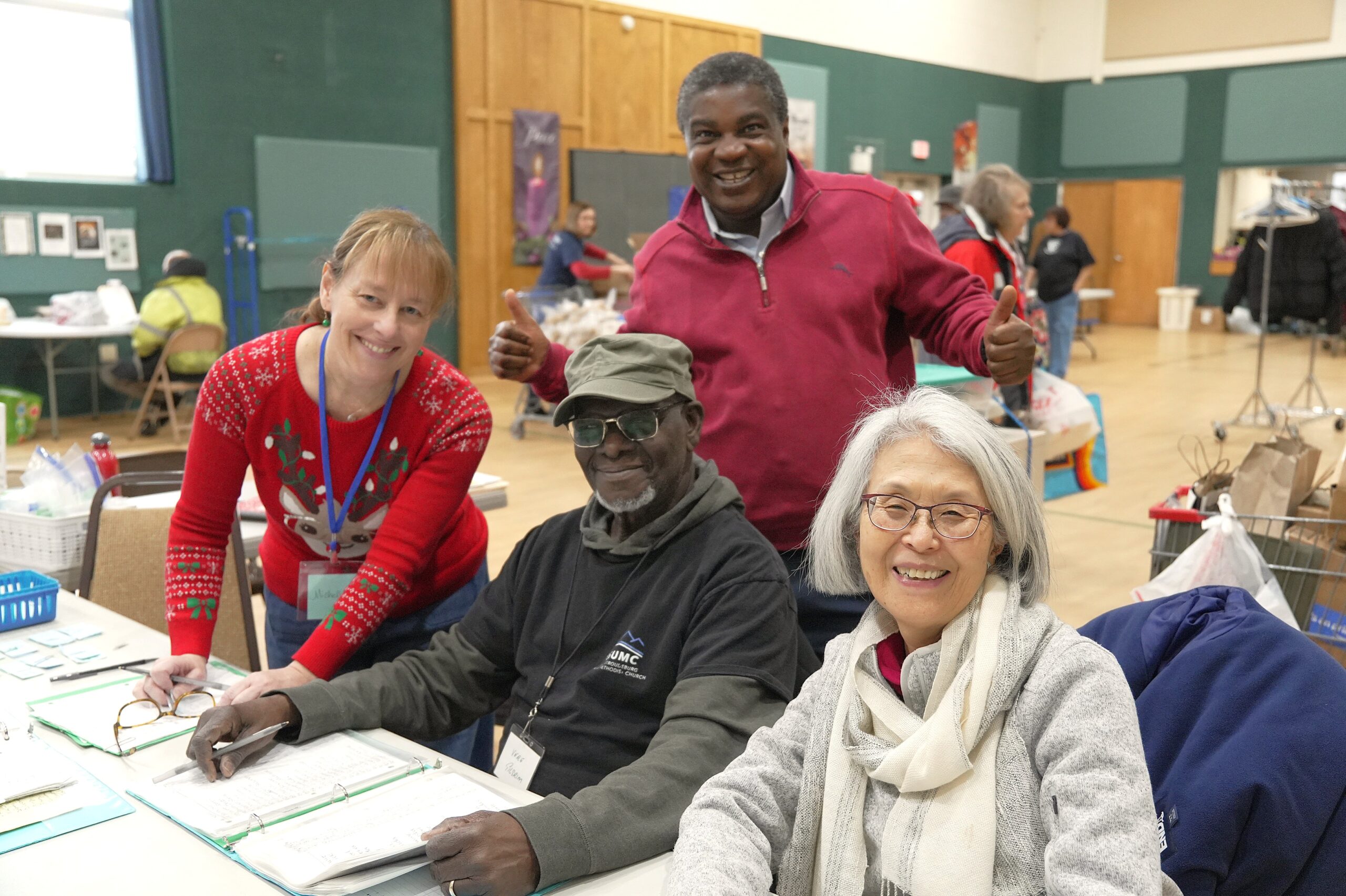
It is Monday afternoon, the sidewalks are lined with snow, and the temperature is well below freezing in East Stroudsburg, Pennsylvania. But inside East Stroudsburg United Methodist Church, the gymnasium is bustling with warmth. Tables are lined with fresh groceries, cozy sweaters, hats and gloves, and hot to-go meals. Volunteers move about preparing food and standing ready to welcome guests from the community with smiles.

Building Trust, One Meal at a Time
The Monday afternoon weekly community meal at the church has been a staple for residents of East Stroudsburg for well over a dozen years. Ana Price, who coordinates the ministry, wryly recalls when fourteen years ago, she was asked to take the lead for just a few months. But there is no doubt, Price’s commitment to serving those experiencing food insecurity is genuine and deep. And it all stems from an abiding trust in God.
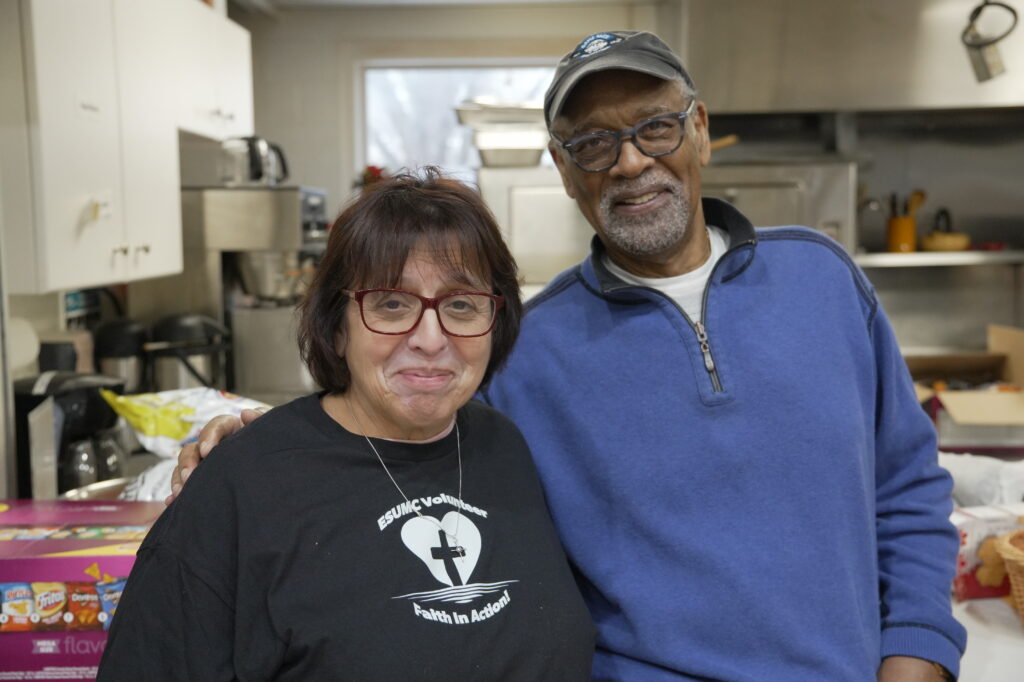
“I show up at 7am on Monday and I don’t know what the menu is going to be,” says Price. While some might find the pressure of menu-planning, cooking, and serving up to 300 meals all in one day to be too much, for Price, it is an exercise in trust. The menu must be nutritionally balanced, and it must be created from the donations that come in each week from partners like ShopRite. This week’s offering was sloppy joes, cornbread, a fruit or vegetable, and dessert.
Week after week, Price and the volunteers at East Stroudsburg UMC ground themselves in God—spending time together in devotion and prayer ahead of opening the doors—and week after week, God provides. Just as they trust God, so also do they recognize the importance of building trust with those they serve.
In 2020, when the COVID-19 pandemic hit, the church insisted on continuing to serve the community meal, knowing how much people rely on it. To minimize health risks, the volunteer team was limited to five people who committed to limiting outside exposure. The community learned they could rely on the people of East Stroudsburg UMC, even in extraordinary circumstances.
More recently, the ministry experienced a shortage of turkeys to distribute to their guests at Thanksgiving. Price was worried and didn’t know what to do. She decided to put her trust in God and in the people she serves. “I got up in front of [the people here to receive food] and said, ‘I’ve only got 50 turkeys. I don’t have enough to give to everyone here. What would you do if you were in my shoes?’”
One by one, people raised their hands. One said they’d received a turkey at another church, another at the grocery store; still others said that they didn’t need one. In the end, everyone who needed a turkey got one. “It was a God thing,” said Price.
Planting New (Mustard) Seeds
Although East Stroudsburg UMC has been steadfastly serving the community meal for many years, its feeding ministry has not remained static. It has responded to changing needs in the community.
Rev. Samuel Kofi Ashley, lead pastor of East Stroudsburg UMC shared how, in recent years, there was a sudden increase in Hispanic families who were attending the community meal. Price, herself an Argentina native, began giving the opening welcome, instructions and prayer in Spanish, alongside Rev. Ashley in English.
As comfort grew and trust was gained, these families began to attend the church’s “Fourth Friday” community events – like line dancing and crafts. The potential for outreach seemed strong and the church was beginning to put ministries in place to deepen these relationships, like a Bible study in Spanish for moms, with childcare provided.
The church applied for—and received—an UMCOR Mustard Seed Grant for “a community-based service project and ministry focused on migrants and refugees.” But when immigration raids and enforcement intensified, says Pastor Ashley, there was a dramatic drop in the number of Hispanic families and individuals at the community meal and other church events.
In that moment, the church’s capacity for building trust allowed them to pivot so they could serve the most vulnerable among them. Understanding the fear that many were feeling, the church continued with its Bible study in Spanish. They created a space for childcare in the room right next door—within earshot and line of vision—so that parents and children could feel safe. They placed bilingual signs around the space to make Spanish-speakers feel welcome. They collect little identifying information from Bible study participants, knowing that sharing that information can be intimidating for those already living in fear.
Although the Bible study does not have the high attendance numbers that church leaders had originally envisioned, it nevertheless is proving to be fertile ground for mustard seeds of faith. Those who do attend the Bible study are beginning to learn what it means to have a personal relationship with Christ, shares Price.
Participants take turns choosing the topic for the Bible study and they are beginning to talk to their extended families and neighbors about what they are learning. They are also able to share resources that the church provides with their loved ones—like feminine hygiene products and children’s books in Spanish and English.
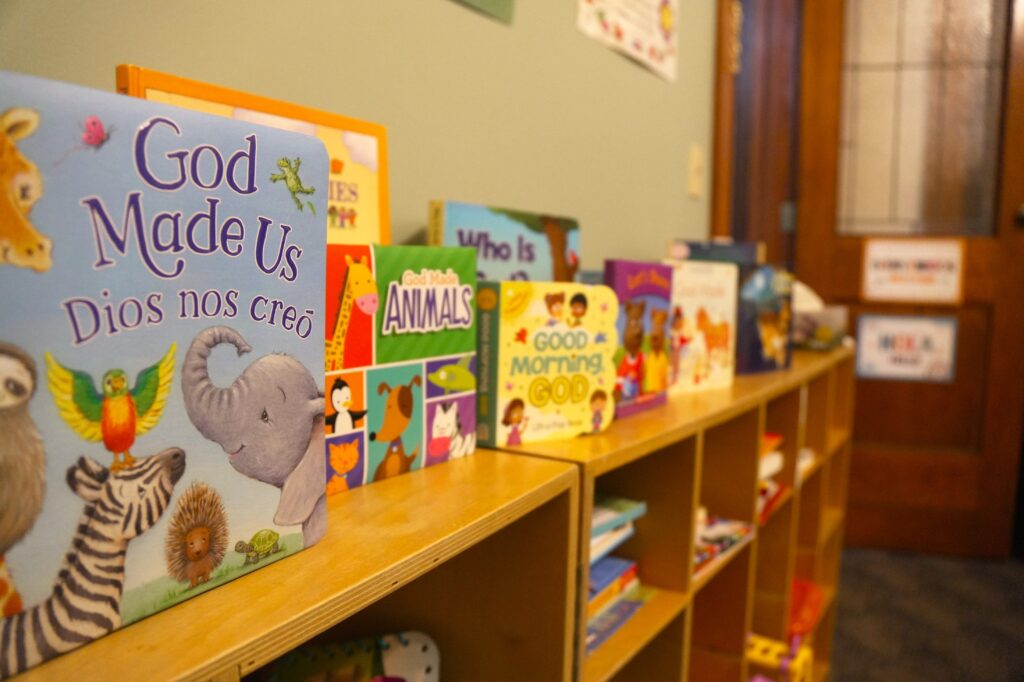
Michelle, a volunteer who provides childcare during the Bible study, shared that when she first began, she focused on building relationships, unsure of the children’s religious backgrounds. Eventually, she talked with them about Jesus, who said, “Let the little children come to me” (Matt. 19:14). Later that day, while a child played with a Paw Patrol toy, Michelle asked what the show was about. “It’s like the man you talked about,” the child replied. “They are kind, and they help kids.” Despite differences in language, culture, and age, Michelle’s message had clearly connected.
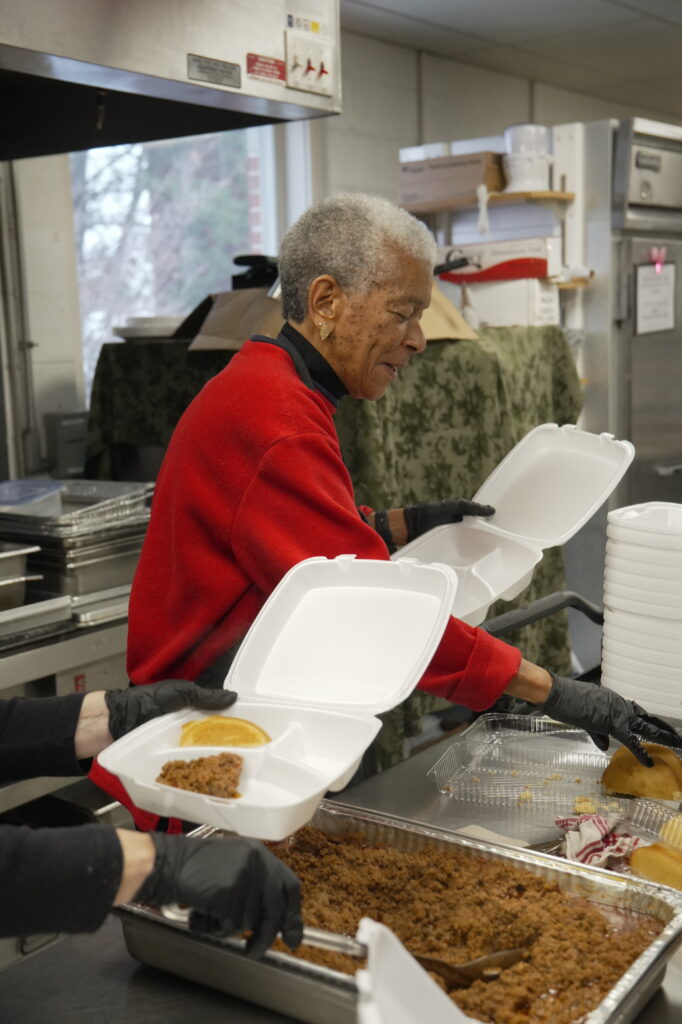
Eileen, a community meal volunteer, is also finding meaningful connection through the Bible study. She only speaks a little bit of Spanish but loves the language and is learning it more as she participates in the Bible study. Moreover, she is getting to know the other women in the group and feels honored to learn their stories.
These moments of connection and trust may seem small, but they are the mustard seeds that, with God’s help, will grow into a tree whose branches provide safety and refuge for those who abide in it. The people of East Stroudsburg UMC are a people practiced in acts of trust. They have experienced the blessings that come when a community steps out in faith. As they look ahead for new opportunities to serve the people around them—especially the hungry, the thirst, the naked, the stranger, the imprisoned and the sick—they no doubt will continue to know the joy of serving Christ himself.