
In 2010, the Rev. David Brown published Freedom Drawn from Within: A History of the Delaware Annual Conference. On Saturday, December 12, he will be leading a workshop once again exploring the history of the Delaware Annual Conference and its legacy for the United Methodists of Eastern Pennsylvania and Greater New Jersey today.
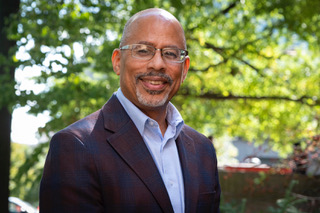
The workshop, hosted by Eastern Pennsylvania’s Healing the Wounds of Racism Core Accountability Team, begins with a recognition that understanding the past is essential to addressing the present. “To dismantle the institutional structure of racism,” the workshop’s organizers write, “we must understand how racism was expressed through institutional structures in the past.”
One such structure in Methodist history was the existence of racially segregated annual conferences. The Delaware Annual Conference, the first segregated annual conference in the Methodist Episcopal Church, included churches that are now part of the Eastern Pennsylvania and Greater New Jersey Annual Conferences. It existed from 1864 to 1965, when it was folded into the General Conference of The Methodist Church—one of the stipulations for the merging of several denominations that would become The United Methodist Church in 1968.
Despite its relatively recent history, the Delaware Annual Conference is not widely known or discussed among United Methodists. For Brown, the journey to learn about it began with what he describes as “a very embarrassing moment.”
Some years ago, a senior pastoral leader in the Eastern Pennsylvania Conference, was talking with Brown and some other young African American pastors, all lifelong Methodists, about the Delaware Annual Conference. When they admitted they were unfamiliar with it, the pastor responded, “You don’t even know who you are,” and walked away.
While Brown deeply respected the pastor and appreciated the encounter, he also laments that the moment did not turn into a conversation. “There was an expectation that we should know,” shares Brown. “It was never taught to me; it was never shared with me. I don’t know why. Maybe it was too painful; maybe it was intentional. I don’t know. But what I do know is I didn’t know about it.”
For Brown, the fact that he could grow up as a lifelong African American Methodist, attending Camphor Memorial – a church that had been central to the Delaware Annual Conference – without knowing this history points to a larger problem. It reflects a lack of understanding among United Methodists about the role African Americans played in shaping our modern-day church and is itself a manifestation of racism. Addressing it means more than expecting people to know their history. It means finding ways to “make these stories come to life in ways that are not indicting anybody but are informing people,” Brown says.
Learning this history is not just a matter of being informed about the past. “We call our ancestors ‘ancestors’ for a reason,” shares Brown. “They had lessons that can help inform our path. And I think to the extent that we choose to ignore them, we do so at our own peril.”
The history of the Delaware Annual Conference reflects the broader experiences of African Americans in the United States during the Civil War, the abolition of slavery and Reconstruction. In the Methodist Episcopal Church, African Americans sought a conference where they could be nurtured and exercise a degree of independence while remaining within the denomination’s structure.
Brown sees lessons in that history for the church’s present-day challenges, including tensions surrounding LGBTQIA+ inclusion and denominational unity. He points to the experience of African Americans who had to fight for access to pulpits, resources, and opportunities to participate fully in the church. He also references Dr. Lovett Weems Jr.’s recent book, The Aura of Hope (2026), and its call for the church to attend to the people already entrusted to its care rather than continually looking elsewhere for growth.
Reflecting on another historic period in Methodist history—when Richard Allen and Absalom Jones walked out of Historic St. George’s Methodist Church in protest of racial discrimination and later founded the African Methodist Episcopal Church—Brown says, “All of us, at some point, find ourselves either part of the in-group or the out-group. And we make choices as to whether or not we stay and fight or leave and find something else.”
These choices continue to shape the church. For Brown, unity does not mean ignoring exclusion or avoiding difficult conversations. Sometimes, working toward a more inclusive church requires challenging practices that stand in the way. As he puts it, the church must be willing to fight against those practices so that the “United” Methodist Church doesn’t become the “untied” Methodist Church.
That work is not limited to addressing one historical injustice or one contemporary division. Dismantling racism, Brown emphasizes, is ongoing. “To dismantle something is a dynamic, not a static move,” he says. “Racism is not something that somehow you can take apart and leave. It reconstitutes in different ways. I always tell people that [dismantling racism] is a journey, not a destination.”
The consequences of the church’s history are not only a matter of memory. Brown is currently pursuing a Ph.D. in professional practice at Eastern University, examining why Black United Methodist churches in Philadelphia continue to struggle with viability and how they might build stronger futures.
Many of these congregations are located in communities experiencing economic decline. As a result, they face a difficult combination: fewer congregational members with financial resources to give, alongside greater needs in the communities they serve. Brown believes the church must take what it has learned from its history and apply those lessons to supporting and strengthening congregations today.
He remembers driving through West Philadelphia as a child and seeing a church and a bar on nearly every corner. Decades later, he says, “the churches are not there, but the bars still are.”
It is an image that points to questions larger than the survival of individual congregations: What role do churches play in their communities? What resources and support do they need to sustain that work? And what might the church learn from congregations that are finding new ways to thrive?
For Brown, the purpose of revisiting the Delaware Annual Conference is not simply to make sure United Methodists know what happened. It is to help them consider what that history asks of the church now—and what kind of church they want to build for the future. That is the invitation of the December 12 workshop: to recover a part of the church’s shared history, listen for what it can teach, and consider how those lessons might shape the church’s life and witness today.