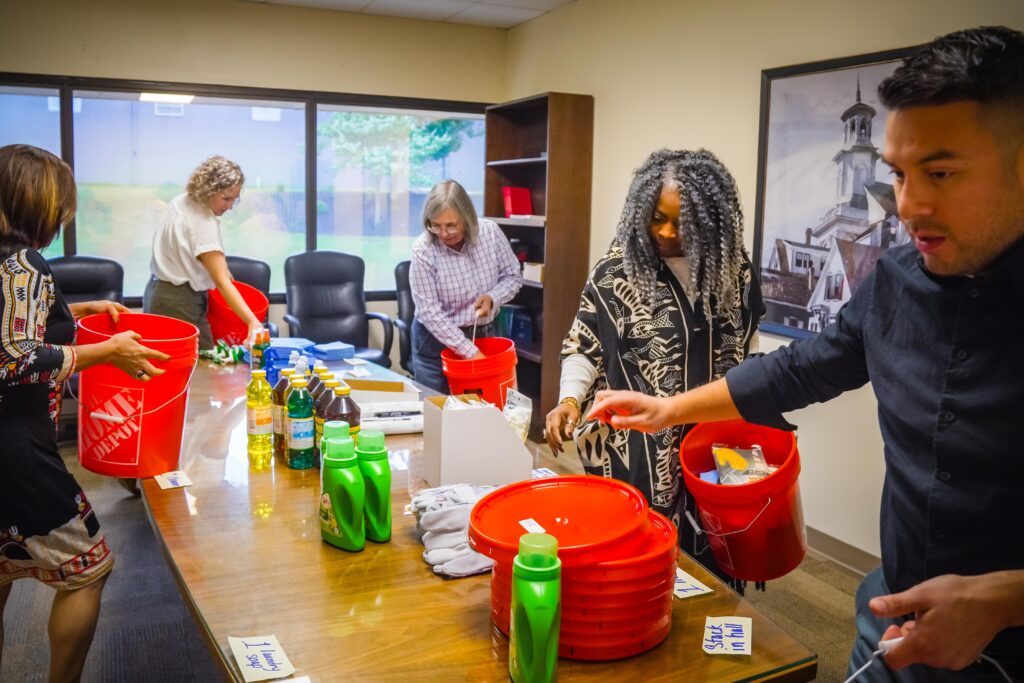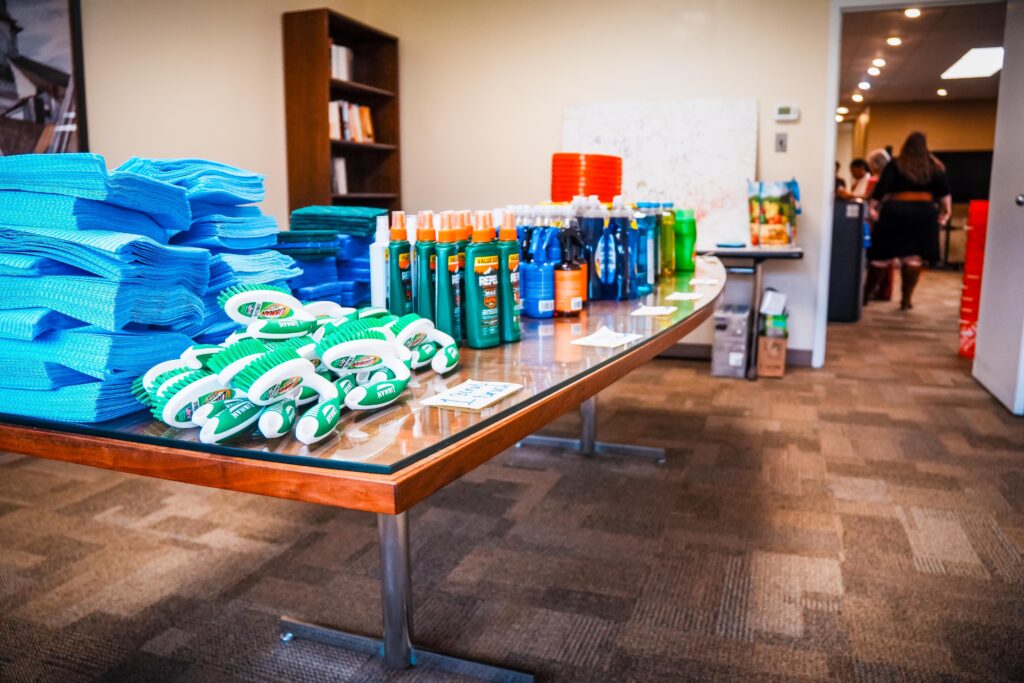
Hurricane response


F L O O D W A R N I N G

With HURRICANE IRENE pending and expected flooding, ERT volunteers may need to be activated to respond to the needs within the Eastern Pennsylvania Conference of The United Methodist Church.  The state is predicting that the Delaware, Schuylkill, Susquehanna, Lehigh, Neshaminy Rivers and Bradywine and Chester Creeks will be reaching dangerous flood levels.
With up to 10" of rain expected, larger creeks could begin to flood later in the afternoon and tonight. It will probably take until tomorrow afternoon and night for minor to moderate flooding to begin. Because water levels are higher going into this current system, we anticipate the overall flooding to be worse and to affect more areas this time. Run-off from flooding rains continues for many hours after the rain has ended, so creek and river levels may still rise for a time, before improving. Strong winds could bring also down trees and wires in some spots.
For more information or to request assistance, contact: 
Bob Simcox, ERT Coordinator, 1.484.653.9916 or SIMKIM9788@aol.com
Debra DePrinzio,  Disaster Response Coordinator,  215.919.9789 or ddeprinzio@comcast.com.

Here are some tips for congregations and the conference with Hurricane Irene approaching:

Things congregations can do to serve their communities should localized flooding occur:

1) Identify how your congregation will make decisions about what support to offer. (Decision makers could be: Ad Board President, Mission Groups,Trustees, Pastor?)

2) Be in conversation with first responders in your congregation, or by calling your local Emergency Management Agency (often the fire marshal) to see how your congregation might support efforts.

3) Offer hospitality to first responders in the form of water, food, or space for staging.

4) Offer hospitality to those who may be temporarily evacuated from their homes.  Such hospitality might be in the form of emergency shelter space, phones, computers, people to listen.

5) Please inform us of any significant impact in your area.  Such impact might include evacuation of multiple families for several days, destruction or extensive damages to multiple houses or to churches, etc.

6) Remember, of course, that our concern is for all who struggle, not just for members of our own congregations.

A few additional reminders for congregations and conference:

·         SECURE PERSONAL, CONFERENCE AND CHURCH PROPERTY

·         RELIEF SUPPLIES: For relief supplies, please contact/coordinate directly with Kathy Kraiza, Director of Sager-Brown. You will want to know type of supplies and estimated number needed; delivery location that has sufficient space for storage; contact person for coordinating delivery; and a distribution plan. If you are designating someone else to coordinate supplies, please make sure this person knows to tell Kathy that they are the designee on behalf of the Conference Disaster Response Coordinator. Kathy’s contact information is:

Kathy Kraiza (director@sagerbrown.org)

Office (337) 923-2027 ext 216

Cell (337) 578-0156

·         EARLY RESPONSE TEAMS:  While Early Response Teams are self-sufficient, they do not self-deploy - coordination is still necessary. Please allow the Conference time to make assessments and determine their need. If Early Response Teams are needed outside of the affected Conference, the Conference personnel will notify Greg Forester. Look for information from Greg. Greg’s contact information is:

Greg Forrester (UMVIMNEJ@twcny.rr.com)  (607) 756-7799

·         CONFERENCE COMMUNICATIONS: Review your Conference plan with key leadership. Get the word out to would-be volunteers about how and when we respond. Consider pre-planning for communications with Conference personnel, clergy and others as to the process for reporting personal safety and damage assessments. Contact clergy in advance of the storm who are located in areas that are most vulnerable to the effects of Irene - be sure they know who to contact after the disaster to check in and report damage. If you have an emergency communications plan, consider if it should be activated, and when. Talk with your Conference communications person to see if you can pre-plan for messaging via the Conference web-site. Communicate in advance of the storm, and post-disaster, with your State VOAD.

·         READINESS AND RELIEF MINISTRIES: In advance of the storm, and afterwards when safe, check on vulnerable persons associated with your congregations and communities. Consider whether churches on a planned evacuation route can safely serve as hospitality centers for those passing through. Consider what your Conference recommendations are for sheltering. If a church will serve as a shelter, typically it should have an agreement (pre-disaster) with the American Red Cross chapter. When feasible, work in coordination with other voluntary agencies and/or emergency management for relief efforts.

·         SELF-CARE: Please secure your safety and that of your family first. If evacuation is advised, please comply and relay the same message to congregants. If your family or church is affected, you may need to pass your responsibilities for Conference disaster coordination to someone else so you can meet the needs of those for whom you are directly responsible. Hopefully this is part of your Conference plan. If long term recovery ministries become necessary, you will be needed to provide leadership for an extended period. Pace yourself; ask for help; designate whenever possible.

·         TRAINING VOLUNTEERS: After a significant disaster, it is not unusual that people want to volunteer and are eager for training. Consider what the response might be and what trainings might best be scheduled. Be ready to train volunteers to serve in a Conference call-center if needed.   Think about other “just in time” trainings, such as Care Team and I&R. Interest in Connecting Neighbors for church readiness. UMCOR’s training menu and training request form may be found on line.

Disaster response on behalf of the Church is a ministry of service. Thank you for yours! 

When preparing for a possible emergency situation, it's best to think first about the basics of survival: fresh waterfoodclean air and warmth.

Recommended Items to Include in a Basic Emergency Supply Kit:

  • Water, one gallon of water per person per day for at least three days, for drinking and sanitation
  • Food, at least a three-day supply of non-perishable food
  • Battery-powered or hand crank radio and a NOAA Weather Radio with tone alert and extra batteries for both
  • Flashlight and extra batteries
  • First aid kit
  • Whistle to signal for help
  • Dust mask, to help filter contaminated air and plastic sheeting and duct tape to shelter-in-place
  • Moist towelettes, garbage bags and plastic ties for personal sanitation
  • Wrench or pliers to turn off utilities
  • Can opener for food (if kit contains canned food)
  • Local maps
  • Cell phone with chargers

Additional Items to Consider Adding to an Emergency Supply Kit:

  • Prescription medications and glasses
  • Infant formula and diapers
  • Pet food and extra water for your pet
  • Important family documents such as copies of insurance policies, identification and bank account records in a waterproof, portable container
  • Cash or traveler's checks and change
  • Emergency reference material such as a first aid book or information from www.ready.gov
  • Sleeping bag or warm blanket for each person. Consider additional bedding if you live in a cold-weather climate.
  • Complete change of clothing including a long sleeved shirt, long pants and sturdy shoes. Consider additional clothing if you live in a cold-weather climate.
  • Household chlorine bleach and medicine dropper – When diluted nine parts water to one part bleach, bleach can be used as a disinfectant. Or in an emergency, you can use it to treat water by using 16 drops of regular household liquid bleach per gallon of water. Do not use scented, color safe or bleaches with added cleaners.
  • Fire Extinguisher
  • Matches in a waterproof container
  • Feminine supplies and personal hygiene items
  • Mess kits, paper cups, plates and plastic utensils, paper towels
  • Paper and pencil
  • Books, games, puzzles or other activities for children

Hurricanes

Step 1: Build A Kit / "To-Go Bag"

Get an Emergency Supply Kit, which includes items like non-perishable food, water, a battery-powered or hand-crank radio, extra flashlights and batteries. You may want to prepare a portable kit and keep it in your car in case you are told to evacuate.

Step 2: Make a Plan

Prepare your family
Make a Family Emergency Plan. Your family may not be together when disaster strikes, so it is important to know how you will contact one another, how you will get back together and what you will do in case of an emergency. You should also consider:

Plan to Protect Property
Hurricanes cause heavy rains that can cause extensive flood damage in coastal and inland areas. Everyone is at risk and should consider flood insurance protection. Flood insurance is the only way to financially protect your property or business from flood damage.  To learn more about your flooding risk and how to protect yourself and your business, visit the NFIP Web site, www.floodsmart.gov or call 1-800-427-2419.

For more detailed information on how you can protect your property, view the Federal Insurance and Mitigation Administration's printer-friendly handout Avoiding Hurricane Damage

In addition to insurance, you can also:

  • Cover all of your home's windows with pre-cut ply wood or hurricane shutters to protect your windows from high winds.
  • Plan to bring in all outdoor furniture, decorations, garbage cans and anything else that is not tied down.
  • Keep all trees and shrubs well trimmed so they are more wind resistant.
  • Secure your home by closing shutters, and securing outdoor objects or bringing them inside.
  • Turn off utilities as instructed. Otherwise, turn the refrigerator thermostat to its coldest setting and keep its doors closed.
  • Turn off propane tanks.
  • Install a generator for emergencies
  • Reinforce your garage doors; if wind enters a garage, it can cause dangerous and expensive structural damage.
  • Ensure a supply of water for sanitary purposes such as cleaning and flushing toilets. Fill the bathtub and other large containers with water.
  • Find out how to keep food safe during and after and emergency by visiting www.FoodSafety.gov.

Step 3: Be Informed

If a hurricane is likely in your area, you should:

  • Listen to the radio or TV for information.
  • Secure your home, close storm shutters, and secure outdoor objects or bring them indoors.
  • Turn off utilities if instructed to do so. Otherwise, turn the refrigerator thermostat to its coldest setting and keep its doors closed.
  • Turn off propane tanks.· Avoid using the phone, except for serious emergencies.
  • Ensure a supply of water for sanitary purposes such as cleaning and flushing toilets. Fill the bathtub and other large containers with water.

You should evacuate under the following conditions:

  • If you are directed by local authorities to do so. Be sure to follow their instructions.
  • If you live in a mobile home or temporary structure—such shelters are particularly hazardous during hurricanes no matter how well fastened to the ground.
  • If you live in a high-rise building—hurricane winds are stronger at higher elevations.
  • If you live on the coast, on a floodplain, near a river, or on an inland waterway.
  • If you feel you are in danger.

If you are unable to evacuate, go to your safe room. If you do not have one, follow these guidelines:

  • Stay indoors during the hurricane and away from windows and glass doors.
  • Close all interior doors—secure and brace external doors.
  • Keep curtains and blinds closed. Do not be fooled if there is a lull; it could be the eye of the storm - winds will pick up again.
  • Take refuge in a small interior room, closet, or hallway on the lowest level.
  • Lie on the floor under a table or another sturdy object.

Familiarize yourself with the terms that are used to identify a hurricane.

  • hurricane watch means a hurricane is possible in your area. Be prepared to evacuate. Monitor local radio and television news outlets or listen to NOAA Weather Radio for the latest developments.
  • hurricane warning is when a hurricane is expected in your area. If local authorities advise you to evacuate, leave immediately.

Hurricanes are classified into five categories based on their wind speed, central pressure, and damage potential. Category Three and higher hurricanes are considered major hurricanes, though Categories One and Two are still extremely dangerous and warrant your full attention.

News

Read the latest news of the Eastern Pennsylvania Conference.

Photos

View photo galleries of Conference events and news stories.

Videos

See the latest videos by the Eastern Pennsylvania Conference.

Bishop's Blog

Bishop's Blog

Read thoughts on faith and life from Bishop Peggy Johnson.