
- About Us
- Ministry
- News
- Events
- Calendar
- Annual Conference
- 2011 Journal
- 2012 Laity Academy
- 2012 Retiree Luncheon
- Advanced Sexual Ethics: The Elephant in the Sanctuary
- Advanced Sexual Ethics: Issues for Clergy Women
- Basic Sexual Ethics Workshop
- Freedom Drawn From Within - Book Sale
- NEJUMC Congress of Deaf Ministry
- Partners in Action
- Event Registrations
- Resources
- Finance
- Capital Campaign
Monday, February 22, 2010
Congo Partnership
Eastern Pa Annual Conference Partnership with Central Congo Area
In 2009 the Eastern Pa Annual Conference joined with the Pennisula Delaware Annual Conference in an area-wide partnership with the Central Congo Area.
The Pen-Del conference has had a significant history of successful ministry with the United Methodist Church in the Congo, and we are pleased to now join them in this partnership. In 2010 an EPA- Congo Partnership Team began to meet . The goal of the team is to help the churches of the Annual Conference “ Consider, Connect and Contribute” to enhance the mission of the church in the Central Congo area.
Consider: Current Mission Focus
Following the recommendations of an Assesment team that traveled to the Congo area, and in consultation with Bishop Yemba, the following projects are our current focus:
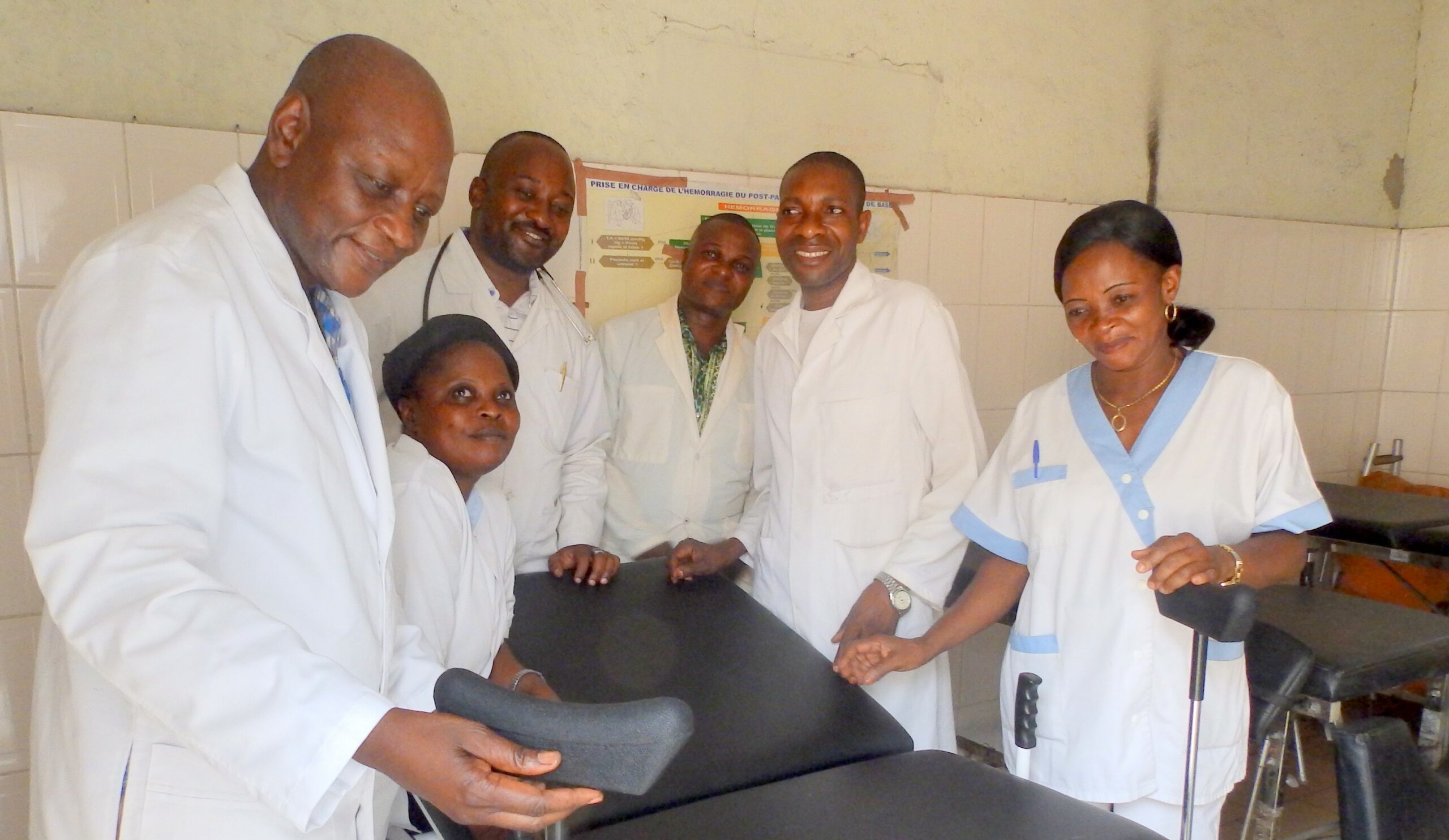
1)Support of the Mpasa Clinic and Nutrition Center for supplies , staffing and special needs. Provision of a vehicle for patient and supply transport, solar energy, and expansion of the Mpasa site.
2)Transportation – Airplane Replacement $130,000 total
3) Agriculture – training for Congolese in Zambia.
4) Resource Center Development for the Conference.
5) Communication Resourcing – computers and wireless internet
with solar chargers.
6) Local Church Projects – to be further developed.
Consider:Central Congo Episcopal Area at a Glance
- Democratic Republic of Congo
- The 3rd largest African country after Sudan and Algeria
- Called Belgian Congo from 1908-1960
- Independence: June 30, 1960
- 11 Provinces, including Kinshasa (also the Capital City)
- 9 Neighboring Countries
- More than 4 million have died from violence, hunger and diseases since 1996. Many repeated wars.
- Historic legislative and Presidential Elections were held in 2006
- Central Congo Episcopal Area
- Bishop W.R. Lambuth made visits to the area in 1912 and 1914. The Wembo Nyama Mission was established in 1914.
- There have been 8 Episcopal Leaders since 1914. Bishop Onema served from 1972-2005. D.K. Yemba was elected and assigned as Bishop in 2005 to present.
- 6 Annual Conferences make up the area.
- New Mission in Congo Brazzaville and Central African Republic.
- 40 Districts in the Area.
- Lay Full church members estimated at 324,380
- Preparatory church members estimated at 219,243
- Ordained Clergy: 497
- Local Pastors: 268
- Organized Local Churches: 942
- Regular Preaching Places: 1,103 estimated.
- Hospitals:3
- Health Centers :24
- Church Schools: 568 with estimated enrollment of 98,127
Areas of need, Challenges and Mission Opportunities in Central Congo Episcopal Area include:
- Education: Training of Existing and new Leadership.
- Alleviation of Poverty
- Health
- Infrastructure: Churches, Health and Educations Institutions
- Communications Systems
- Agriculture
- Transportation
- Specialized Ministry Development
- Ultimate Goal: Making Disciples of Jesus Christ for a Transformed world.
Connect: General Information on Democratic Republic of Congo
Geography
The Congo, in west-central Africa, is bordered by the Republic of Congo, the Central African Republic, the Sudan, Uganda, Rwanda, Burundi, Tanzania, Zambia, Angola, and the Atlantic Ocean. It is one-quarter the size of the U.S. The principal rivers are the Ubangi and Bomu in the north and the Congo in the west, which flows into the Atlantic. The entire length of Lake Tanganyika lies along the eastern border with Tanzania and Burundi.
History
Formerly the Belgian Congo, this territory was inhabited by ancient Negrito peoples (Pygmies), who were pushed into the mountains by Bantu and Nilotic invaders. The American correspondent Henry M. Stanley navigated the Congo River in 1877 and opened the interior to exploration. Commissioned by King Leopold II of the Belgians, Stanley made treaties with native chiefs that enabled the king to obtain personal title to the territory at the Berlin Conference of 1885.
Leopold accumulated a vast personal fortune from ivory and rubber through Congolese slave labor; 10 million people are estimated to have died from forced labor, starvation, and outright extermination during Leopold's colonial rule. His brutal exploitation of the Congo eventually became an international cause célèbre, prompting Belgium to take over administration of the Congo, which remained a colony until agitation for independence forced Brussels to grant freedom on June 30, 1960. In elections that month, two prominent nationalists won: Patrice Lumumba of the leftist Mouvement National Congolais became prime minister and Joseph Kasavubu of the ABAKO Party became head of state.
But within weeks of independence, the Katanga Province, led by Moise Tshombe, seceded from the new republic, and another mining province, South Kasai, followed. Belgium sent paratroopers to quell the civil war, and the United Nations flew in a peacekeeping force.
Kasavubu staged an army coup in 1960 and handed Lumumba over to the Katangan forces. A UN investigating commission found that Lumumba had been killed by a Belgian mercenary in the presence of Tshombe, who was then the president of Katanga. U.S. and Belgian involvement in the assassination have been alleged. In a possibly related development, Dag Hammarskjold, UN secretary-general, died in a plane crash en route to a peace conference with Tshombe on Sept. 17, 1961.
Tshombe rejected a national reconciliation plan submitted by the UN in 1962. Tshombe's troops fired on the UN force in December, and in the ensuing conflict Tshombe capitulated on Jan. 14, 1963. The peacekeeping force withdrew, and, in a complete about-face, Kasavubu named Tshombe premier in order to fight a spreading rebellion. Tshombe used foreign mercenaries, and, with the help of Belgian paratroops airlifted by U.S. planes, defeated the most serious opposition, a Communist-backed regime in the northeast.
Kasavubu abruptly dismissed Tshombe in 1965 but was then himself ousted by Gen. Joseph-Desiré Mobutu, army chief of staff. The new president nationalized the Union Minière, the Belgian copper mining enterprise that had been a dominant force in the Congo since colonial days. Mobutu eliminated opposition to win the election in 1970. In 1975, he nationalized much of the economy, barred religious instruction in schools, and decreed the adoption of African names. He changed the country's name to Zaire and his own to Mobuto Sese Seko, which means “the all-powerful warrior who, because of his endurance and inflexible will to win, will go from conquest to conquest leaving fire in his wake.” In 1977, invaders from Angola calling themselves the Congolese National Liberation Front pushed into Shaba (Katanga) and threatened the important mining center of Kolwezi. France and Belgium provided military aid to defeat the rebels.
Laurent Kabila and his long-standing but little-known guerrilla movement launched a seven-month campaign that ousted Mobutu in May 1997, ending one of the world's most corrupt and megalomaniacal regimes. The last of the CIA-nurtured cold war despots, Mobutu deftly courted France and the U.S., which used Zaire as a launching pad for covert operations against bordering countries, particularly Marxist Angola. Mobutu's disastrous policies drove his country into economic collapse while he siphoned off millions of dollars for himself.
The country was renamed the Democratic Republic of the Congo in 1997, which had been its name before Mobutu changed it to Zaire in 1971. But elation over Mobutu's downfall faded as Kabila's own autocratic style emerged, and he seemed devoid of a clear plan for reconstructing the country. In Aug. 1998, Congolese rebel forces, backed by Kabila's former allies, Rwanda and Uganda, gained control of a large portion of the country until Angolan, Namibian, and Zimbabwean troops came to Kabila's aid. In 1999, the Lusaka Accord was signed by all six of the countries involved, as well as by most, but not all, of the various rebel groups.
In Jan. 2001, Kabila was assassinated, allegedly by one of his bodyguards. His young and inexperienced son Joseph became the new president. He demonstrated a willingness to engage in talks to end the civil war. In April 2002, the government agreed to a power-sharing arrangement with Ugandan-supported rebels and signed a peace accord with Rwanda and Uganda. More than 2.5 million people are estimated to have died in the Congo's complex four-year civil war, which involved seven foreign armies and numerous rebel groups that often fought among themselves.
On July 17, 2003, the Congo's new power-sharing government was inaugurated, but the fighting and killing continued. In April 2003, hundreds of civilians were massacred in the eastern province of Ituri in an ethnic conflict. In 2004, an insurgency in Bukavu erupted, other areas of the Congo grew restive, and Rwanda continued to support various rebel groups fighting the government. By the end of 2004, the death toll from the conflict had reached 3.8 millioDespite instability, political progress continued. In May 2005, a new constitution was adopted by the national assembly, and overwhelmingly ratified in Jan. 2006. On July 30, 2006, the first democratic election in the country since 1970 took place. President Kabila received 44.8% of the vote, which was not enough to win the election outright. Fighting broke out between factions supporting the two major candidates, setting off the worst violence the country has seen since the 2002 peace deal was signed. Kabila was declared the winner in the October run-off election, winning 58% of the vote, the country's first freely elected president in four decades.
In August 2007, a rebel general, Laurent Nkunda, led battles between his militia, made up of fellow Tutsis, and the Congolese Army. The fighting continued throughout the year, driving hundreds of thousands of people from their homes in eastern Congo and threatening to spiral the already fragile country back into civil war. Nkunda claimed he was protecting Tutsis from extremist Rwandan Hutus. In January 2008, the government and the rebels signed an agreement that has both sides withdrawing their troops and the rebels disarming and eventually being integrated into the national army. The cease-fire fell apart in August, and fighting resumed between Nkunda's militia and the army. By the end of October, the rebels had captured the major army base of Rumangaboebel and were advancing towad Goma, the capital of North Kivu province. In addition, angry civilians attacked UN peacekeeping troops, who proved ineffectual in both thwarting the rebels and protecting citizens. The rebels declared a cease-fire before taking Goma. With the cease-fire appearing on the brink of collapse, leaders from several African nations and Ban Ki-moon, the secretary-general of the UN met in Nairobi in November. They signed a pact that calls for an immediate end to the fighting and agreed that if UN troops fail to protect civilians, then African peaceekeepers would take over.
A report released in January 2008 by the International Rescue Committee found that despite billions in aid, the deployment of the world's largest peacekeeping force, and successful democratic elections, some 45,000 people continue die each month in Congo, mostly from starvation and disease.
Connect: Bishop David Yemba
United Methodist Bishop David Kekumba Yemba was eleceted as a life time bishop on August 26, 2008, following an initial 4 year term.
"It was a great expression of joy to know the people have confidence in what we have been doing and want to continue as far as the Lord is helping," he said.
Yemba said the 2008 United Methodist General Conference held in Fort Worth, Texas, set clear priorities for The United Methodist Church to focus on leadership, strengthening congregations, global health, and fighting poverty.
"The people are expecting leadership from the church in terms of how The United Methodist Church and our connectional system can help us exchange experiences, ideas and to share resources."
The Central Congo Area, where Yemba leads the church, is one of the church's largest episcopal areas, with four annual conferences and two provisional annual conferences. Together, they cover 10 out of 11 provinces in the Democratic Republic of Congo.
Yemba said it is a challenge to serve such a large area.
"The Congo has just gotten out of repeated wars and we need people trained to deliver what is needed," he said. "We need district superintendents, lay people ... all pledging to work together with the bishop."
When he was first elected in 2005, Yemba was a professor and founding dean of the faculty of theology at United Methodist-related Africa University in Zimbabwe. He replaced Bishop Fama Onema, who had served the area for more than 30 years.
Yemba was on the staff of Africa University from 1990 until his election. Prior to that, he was a senior lecturer and associate professor at Zaire Protestant Seminary. Bishop Yemba now serves as the Chancellor and chairman of the Board of Directors of Africa University.
He has a bachelor of divinity degree from the Protestant School of Theology of the Congo Free University at Kisangani and a doctorate in systematic theology from the University of Strasbourg, France. He was ordained an elder in the church's Central Congo Annual Conference in 1970.
Yemba and his wife, Henriette, have five children.
Contribute!
Districts, congregations , small groups, families or individuals may choose to support any of the following projects for the Mpasa Clinic and Nutrition Center! Churches may make a one time gift, or provide ongoing support. Contributions may be sent to the EPA Conference Office ( PO Box 820, Valley Forge, PA 19482). Clearly Mark in the memo portion of the check: “EPA-Africa Partnership/Congo”.
Medical Center On going Supplies
Medications…….$700/ month
Disinfectant…….$50/month
Syringes(single use)..$100/month
Surgical Gloves…..$100/month
Medical Center Staff support
Lead Doctor…..$300/month
Staff Doctor…..$200/month
Nurses………..$50/month ( 11 are needed)
Special needs
Hydraulic Operating Bed….$5,000
Childbirth Beds…………….$600 ( 2 are needed)
Cyalitic hearth Lamp………$4,000
Laparotomy Kit…………….$1,000
Caesarean Kit………………$600
Appendectomy Kit………....$500
Hernia Kit……………………$600\
Solar Energy Panels……..$10,000
Nutrition Center –
Supervisor……………$200/month
Nurse………………….$50/month
Nutritionists……………$50/month
General Funds for Food
Other Needs - Funds for a Vehicle to transport patients and supplies.
Adjacent land ( 3 lots at $25,000)
EPA – Congo Partnership Team:
David T. Ryan, Chair
Mary White
Mike Lehr
BumKoo Chung
Olivet Brown


